My Weekday, Non-Travel Routine
A longevity-first framework (not rigid rules)
Most routines you see online are optimized for aesthetics, extremes, or perfect conditions.
This one isn’t.
This is my weekday, non-travel routine—designed to support long-term metabolic health, sustained energy, and high-quality sleep, while still running a demanding professional life.
Think of this as a guiding framework, not a checklist you fail if you miss a box.
Why This Routine Exists
What I do: I design my days around metabolic health first, then energy, focus, and sleep—in that order.
Why I do it: Metabolic health compounds quietly over decades. When blood sugar control, insulin sensitivity, cardiovascular risk, and sleep are dialed in, everything else—energy, cognition, resilience—becomes easier. Optimizing for longevity forces restraint, consistency, and realism instead of short-term wins.
The Non-Negotiables (My Guardrails)
What I do:
- Lights out by 9:00 PM
- 7–7.5 hours of sleep minimum
- Protein every meal
- No added sugar on weekdays
- Daily soluble fiber
- Eating window ends by ~6:30 PM
Why I do it: These guardrails remove decision fatigue and protect the fundamentals that matter most for metabolic health: sleep quality, glucose control, satiety, and recovery. When these are protected, occasional flexibility does far less damage.
Evening: Setting Up Tomorrow (This Is Where Sleep Is Won)
What I do:
- Blue-light–blocking glasses after 6:00 PM
- Lights dimmed throughout the house
- Light TV or reading
- 2 minutes of box breathing
- Supplements as prescribed
- Screens avoided when possible
- Last meal at least 90 minutes before bed
- Alcohol avoided on weekdays
If something is on my mind, I write a reminder for the next day.
Why I do it: Sleep is driven as much by what you do in the evening as by what you do at bedtime. Reducing light exposure supports melatonin production, while mental off-loading lowers nighttime cortisol. Eating earlier improves sleep quality and overnight glucose regulation.
Tip: I use Oura to track my sleep. My bedroom is generally at cool 68 degree, has black out shades and I also use Eight Sleep to regulate my matress temperature
Morning: Prime the System
What I do: Wake-up time: 5:00 AM
Sequence:
- Morning Cocktail: Warm water with ginger, lemon, and cayenne
- Bathroom
- Espresso
- Workout
Why I do it: A consistent wake time anchors circadian rhythm. Hydration and mild stimulation activate the nervous system without overwhelming it. Eliminating early-morning decisions preserves cognitive bandwidth for training and later deep work. My morning cocktail is the best way to kick start improved digestion, immune support, anti-inflammatory effects, and a metabolism boost. Lastly, this also wakes up your gut microbiome.
Tip: You can grate and freeze ginger before hand. Also, you can juice lemon or buy 100% organic lemon juice from a reuptable supermarket of choice.
Caffeine (Used Intentionally)
What I do:
- 6:00 AM: Espresso with Manuka honey (no honey on rest days)
- LMNT electrolytes during workouts
- ~10:00 AM: Coffee with oat milk + 1 tbsp extra virgin olive oil
- No caffeine after 12:00 PM
Why I do it: Caffeine is a performance tool, not a crutch. Early caffeine enhances training output and alertness while protecting sleep by cutting it off early. Honey is reserved for training days to support performance without unnecessary glucose exposure.
Tip: I use Manukora 850 MGO manuka honey that is known to have high volume of antioxidants.
Training & Movement
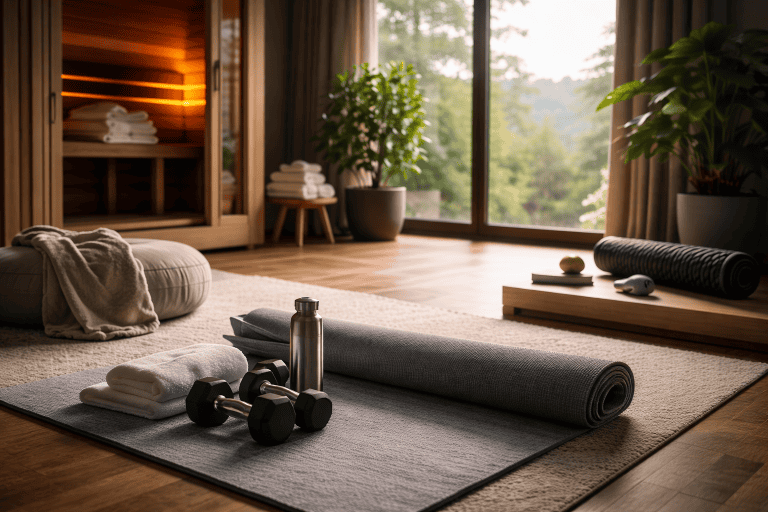
What I do: Workout window: 6:00–7:00 AM (fasted, ~50 minutes)
Weekly structure:
- Strength training: 4× / week
- Zone 2 cardio: 1× / week
- Lactate (Zone 5) run: 1× / week
- Rest days: 2× / week
Morning outdoor walks when weather allows.
Why I do it: Strength preserves muscle and metabolic rate with age. Zone 2 improves mitochondrial efficiency and fat oxidation. Higher-intensity work maintains cardiovascular capacity. Morning training aligns movement with circadian biology and ensures it never gets crowded out by work.
Tip: I do take Perfect Amino supplements to make sure I’m not causing muscle atrophy during workouts
Daily Movement (Outside the Gym)
What I do:
- Target ~8,000 steps per day
- Walks after lunch and dinner
- Hybrid sit/stand desk
- Walking pad when weather limits outdoor movement
Why I do it: Low-intensity movement improves insulin sensitivity, digestion, and recovery without adding stress. Post-meal walks blunt glucose spikes, and frequent movement offsets the metabolic cost of prolonged sitting.
Tip: Even a 2-3 minute brisk walk has shown to reduce glucose spike after a meal, though I recommend a 10 minute walk. If you are not able to walk; I would recommend doing seated calf raises to help with dulling the glucose spike
Nutrition Framework (Weekdays)
What I do: Eating window: 10:00 AM – 6:30 PM
Typical structure:
- 10:00 AM: Whey Protein (Isolate + Casein) shake + coffee + berrys + creatine
- 12:30 PM: Balanced lunch (50% of the plate is vegetables/salads with light dressing, 25% of the plate is protein, 25% of the plate is carbs)
- 3:00 PM: Eggs or Greek yogurt with seeds
- 6:30 PM: Balanced dinner
Principles:
- Vegetarian (eggs OK)
- ~95% whole foods
- Protein in every meal
- Higher protein earlier in the day
- Carbs scale with activity
- 30+ plant foods per week
Why I do it: Time-restricted eating improves metabolic flexibility without rigidity. Front-loading protein supports satiety and muscle protein synthesis. Matching carbs to activity avoids unnecessary glucose load while supporting performance and recovery.
Tip: It is not about dietary choice, but more to do with diversity of food and propotions of macros consumed
Workday Structure (Why This Is Sustainable)
What I do:
- Start work at 8:00 AM
- Deep work prioritized in the first half of the day
- Meetings clustered later
- Email processed intentionally, not constantly
Operating principles:
- Touch things only once
- Delegate and trust
- Avoid meetings when async works
- Focus on minutes, not hours
Why I do it: Cognitive energy is finite. Protecting high-quality focus early improves output and reduces stress later. Structured workdays prevent reactive decision-making that spills into sleep and recovery.
Tip: I generally minimize notifications on my devices to “priority” only.
Stress, Recovery & Metrics
What I do:
- Box breathing 2–3 minutes daily
- Pranayama breathing several mornings per week
- Track DEXA, HRV, and VO2 max
Why I do it: Short, consistent stress-reduction practices lower baseline sympathetic tone. Objective metrics provide feedback loops to confirm that the routine is supporting long-term health, not just short-term productivity.
Tip: If you were to make one change, I would highly recommend incorporating boxed breathing. It literally takes 2-3 mins a day.
Tip #2: Did you know VO2 max is one of the best predeictors of longetivity? Make sure to get it tested in a facility; wearable technology today does a pretty poor job of predicting VO2 max. My reading on my Apple Watch were off by 25% !!
What This Routine Is Not
What I do: I avoid rigid rules or moralizing behaviors.
Why I do it: Sustainability matters more than perfection. A flexible framework survives real life, travel, and unexpected stress without collapsing.
Tip: Change takes time, change needs to take time – to be sustainable.
How to Use This
What I recommend: If you’re overwhelmed, don’t copy everything.
Pick 2–3 habits that fit your current life and start there. Small changes, applied consistently, compound over time.
If you have questions—or want a version of this routine adapted for travel—leave a comment. That post is coming next.