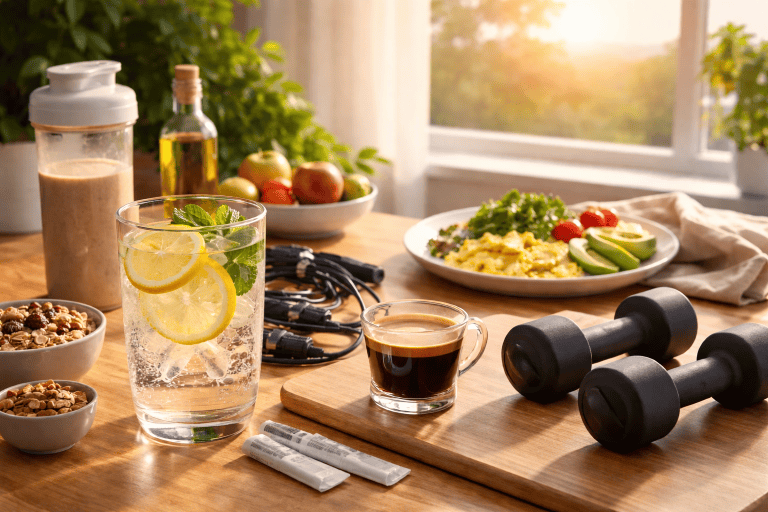
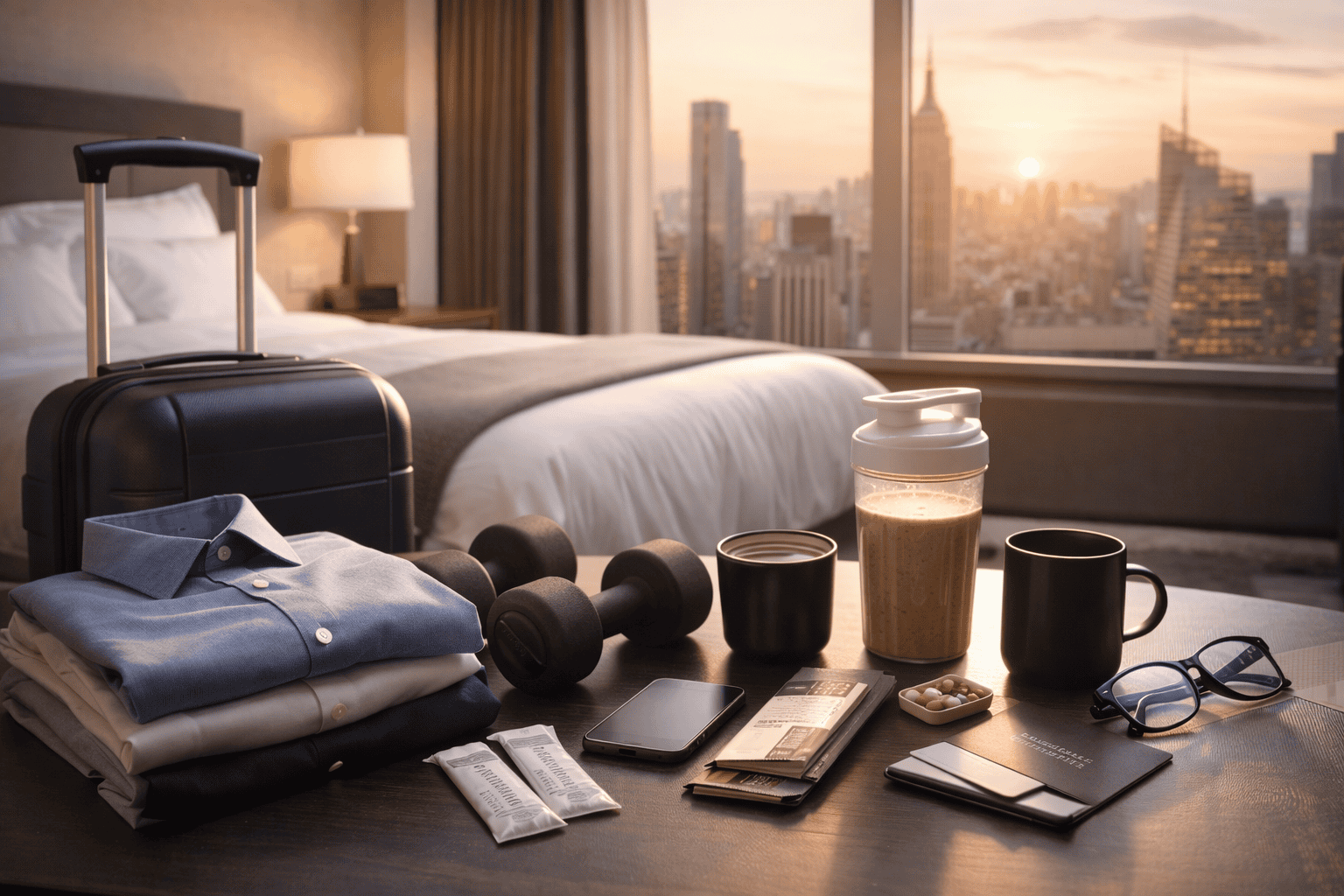
My Travel & Business Trip Routine
How I protect metabolic health when conditions aren’t perfect
Travel is where most healthy routines quietly fall apart. I travel almost on a weekly basis. This guide aims to preview my travel Routine for Metabolic Health
Sleep gets disrupted. Meals become reactive. Movement drops. Stress accumulates.
This routine exists for one reason: to preserve 70–80% of the benefits of my non-travel routine, even when conditions are suboptimal.
Not perfection. Not biohacking. Just damage control that compounds.
First Principle: Travel Is a Temporary State
What I do: I deliberately lower expectations while traveling and focus on preserving key anchors instead of recreating my home routine.
Why I do it: Travel is a short-term stressor. Treating it as permanent leads to frustration, while abandoning structure entirely prolongs recovery. A middle-ground approach minimizes downside and allows a faster return to baseline once I’m home.
Sleep: The Primary Constraint (Not the Gym)
What I do:
- Prioritize consistent sleep timing over perfect duration
- Use blue-light blockers in the evening
- Dim lights as soon as I’m back in the hotel
- Light reading or low-stimulation TV
- 2 minutes of box breathing
- Supplements aligned with my baseline routine
Why I do it: Sleep disruption amplifies insulin resistance, appetite dysregulation, and cognitive fatigue. Protecting circadian cues—light, breathing, and mental decompression—reduces the metabolic and neurological cost of travel even if total sleep time isn’t ideal.
Tip: White noise apps are great especially if your hotel room is close to high traffic area
Morning on the Road: Keep the Anchors
What I do:
- Wake up at a consistent time adjusted gradually for time zones
- Hydrate immediately (water or electrolytes)
- Espresso or coffee
- Intentional movement before meetings
Why I do it: Morning anchors stabilize circadian rhythm and prevent the day from becoming purely reactive. Even a simplified version of my home routine preserves momentum and improves energy regulation throughout the day.
Tip: Walk to a near by breakfast spot.
Training While Traveling: Minimum Effective Dose
What I do: I deprioritize full workouts and focus on movement consistency:
- Walking (highest priority)
- Short hotel gym or bodyweight sessions
- Light cardio when time allows
Why I do it: Trying to force full training sessions during business travel increases stress and decision fatigue. Maintaining movement preserves insulin sensitivity, joint mobility, and mental clarity without adding recovery debt.
Tip: Time your rest day with travel, if possible. If you need to work out, try taking a fitness class when on the road to kick start your morning. I quite enjoy Barry’s bootcamp when I’m on the road
Steps: The Hidden Lever
What I do:
- Walk whenever possible
- Take short walks between meetings
- Add post-meal walks when schedule allows
- Choose movement over convenience
Why I do it: Low-intensity movement has an outsized impact on glucose control during periods of irregular eating and sleep. On travel days, steps often matter more metabolically than structured exercise.
Nutrition: Damage Control, Not Optimization
What I do:
- Lead with protein
- Avoid liquid calories
- Keep eating window reasonable
- Eat smaller, earlier dinners
Typical choices:
- Protein-forward breakfasts or shakes
- Simple, balanced lunches
- Earlier dinners when possible
- Avoid grazing between meetings
Why I do it: Travel food environments are unpredictable. A damage-control mindset prevents overcorrection and guilt. Protein-first decisions support satiety and muscle preservation while limiting unnecessary glucose and lipid spikes.
Tip: I have stopped eating airplane food – high sodium / low quality!
Tip: I carry my protein powers / shakes with me when I travel
Alcohol on Business Trips
What I do:
- Mostly avoid alcohol on short trips
- If drinking socially:
- One drink maximum
- Earlier in the evening
- Hydration prioritized
Why I do it: Alcohol compounds travel-related sleep disruption and recovery debt. Minimizing intake protects sleep quality and preserves next-day cognitive performance, which is usually the primary reason for the trip.
Tip: There are a lot of Zero or Low proof options that allow you partake in social activities without wrecking havoc on your system
Tip: Avoid drinking on an airplane as dry air in the cabin accelerates dehydration.
Workday Structure While Traveling
What I do:
- Identify 1–2 must-win tasks per day
- Avoid inbox-driven workdays
- Insert short walks between meetings
- Decline unnecessary evening calls
Why I do it: Travel increases cognitive load and reduces margin for error. Prioritization and intentional breaks prevent reactive overwork, which often spills into sleep quality and metabolic recovery.
Tip:
Stress & Recovery on the Road
What I do:
- Box breathing for 2–3 minutes daily
- Pranayama breathing on some mornings
- Short decompression before bed
Why I do it: Travel increases baseline sympathetic nervous system activity. Brief, consistent parasympathetic practices prevent cumulative overload and improve sleep depth and emotional regulation.
What This Routine Is Not
What I do: I avoid rigid rules or perfection standards while traveling.
Why I do it: Travel is inherently variable. A flexible framework survives real-world constraints and prevents the all-or-nothing mindset that leads to prolonged disruption.
The Goal: Fast Recovery After Travel
What I optimize for:
- Resume normal routine within 24–48 hours
- No extended reset period
- No guilt-driven overcorrection
Why I do it: The true cost of travel is not the days away—it’s the recovery tail. Fast reintegration protects long-term consistency and prevents repeated metabolic drift.
How to Use This
What I recommend: Pick 2–3 anchors from this routine and apply them consistently.
If you’re unsure where to start:
- Walk more
- Eat protein first
- Protect sleep
These alone preserve most of the benefits while traveling.
Coming next: how I transition back from travel to my home routine, airport food decision rules, and time-zone adjustment strategies.