I’d been reading my ketone meter wrong: fixating on one number when the ratio was the point. Here’s the fix — and the $50 tool it takes.
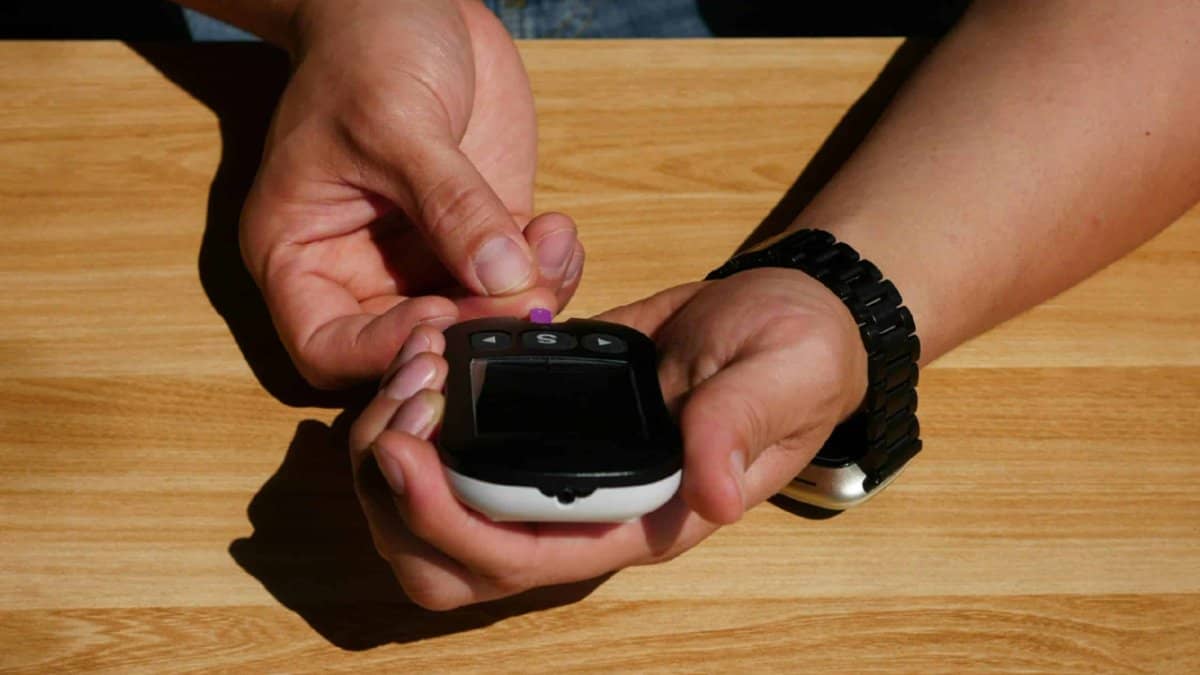
For months I’d prick my finger on a fasted weekday morning — I use a Keto-Mojo meter I bought off Amazon, the kind that reads both glucose and ketones from the same drop of blood — watch the ketone number settle on something like 0.9, and feel a small, quiet satisfaction. In ketosis. Fat tank engaged. Good.
Then I’d check my glucose — 85 — nod at how “normal” that looked, and move on with my espresso.
Two numbers. Two separate little wins. It took me embarrassingly long to realise I was looking at them the way you’d look at a car’s speed and its fuel gauge as if they had nothing to do with each other. They have everything to do with each other. And when I finally started reading them together, as a single ratio, my morning readings went from a vague reassurance to something I could actually track.
That ratio has a name. It’s called the Glucose Ketone Index — GKI — and it’s the most useful measurement upgrade I’ve made since I started tracking anything at all.
New here? Start with Your body has two fuel tanks. You’re probably only using one. That post explains the sugar-tank / fat-tank idea this whole article rests on. This one is the tool that measures it.
The problem with one number
Here’s the thing nobody tells you when you buy a ketone meter: a ketone reading on its own is only half a sentence.
You can be at 0.9 mmol/L of ketones and be genuinely dipping into your fat tank. Or you can be at 0.9 mmol/L with your glucose quietly sitting high — from a stressful morning, bad sleep, a shot of cortisol, or last night’s late rice — in which case you’re not really running on fat at all. You’re running on sugar and producing a few ketones on the side. Same ketone number. Completely different metabolic reality.
Glucose has the same problem in reverse. My 85 looks textbook. But 85 mg/dL on top of near-zero ketones means my body is running entirely on glucose and hasn’t touched the fat tank in a while. That’s a very different state from 85 mg/dL alongside a real ketone reading — even though the glucose number is identical.
Neither number, alone, tells you which fuel your body is actually burning. The relationship between them does. That’s the whole idea behind GKI, and once it clicked, I couldn’t unsee it.
(If the “two fuel tanks” language is new to you, I laid out the whole concept of metabolic flexibility in an earlier piece — this post is the measurement tool that sits on top of it.)
What GKI actually is (and the one-minute math)
The Glucose Ketone Index is just your blood glucose divided by your blood ketones, with both put into the same units. That’s it.
The catch for those of us in the US is that our glucose meters read in mg/dL, while ketones read in mmol/L. To divide them you first have to get glucose into mmol/L, which means dividing your glucose reading by 18.
So the full formula is:
GKI = (glucose in mg/dL ÷ 18) ÷ ketones in mmol/L
Let me do my own morning as the worked example, because abstract formulas are useless:
- Glucose: 85 mg/dL → 85 ÷ 18 = 4.7 mmol/L
- Ketones: 0.9 mmol/L
- GKI = 4.7 ÷ 0.9 = 5.2
One number. And here’s why that single number is more honest than either of the two that made it: it can’t be fooled the way a lone reading can. If my glucose crept up one morning from a bad night’s sleep, my “great” ketone number wouldn’t save the ratio — the GKI would climb and tell me the truth, that I’d drifted back toward the sugar tank. It also settles down faster than raw glucose after a meal, so it’s better for tracking a trend over weeks than for obsessing over any single reading.
Lower GKI means you’re leaning more on the fat tank. Higher means more on sugar. That’s the entire interpretation.
Where my 5.2 actually falls
Here’s a plain-language reference for reading a GKI number. I built this myself rather than borrowing anyone’s chart, and I’ve deliberately framed the bands around what they mean rather than treating “lower” as “better,” because — as you’ll see in a moment — lower is not automatically the goal.
My 5.2 sits in the moderate band. And honestly? That’s exactly where I want it. I’m not on a keto diet — I eat rice, roti, and dal. I’m intermittent fasting on weekdays and training fasted, and a moderate GKI on a fasted morning is my body doing precisely what a flexible metabolism should do: quietly reaching for the fat tank when the sugar tank is running low. I’m not trying to drive that number toward 1. Which brings me to the most important thing in this entire post.
A necessary word about where this measurement came from
The GKI wasn’t invented for people like me. It’s worth being straight about this.
The index was introduced by Dr. Thomas Seyfried and colleagues at Boston College, in a 2015 paper in Nutrition & Metabolism, as a way to track patients on therapeutic ketogenic diets — originally in the context of managing brain cancer, where lowering glucose relative to ketones is part of a clinical strategy. In that world, the target GKI is roughly 1 to 2, achieved deliberately and under medical supervision.
I want to draw a very bright line here. I am borrowing Seyfried’s measuring stick. I am not running his protocol. My 5.2 is not a failure to hit a therapeutic target — it’s me using a genuinely elegant metric for everyday metabolic awareness, which is a completely different job than the one it was designed for. I am not chasing a low GKI. I am not doing ketogenic metabolic therapy. And if you are managing a serious illness, none of this is for you to figure out from a health blog — that is a conversation for your oncologist or physician, full stop.
The reason I’m using the tool at all is that the idea underneath it — that the ratio of your two fuels tells you more than either fuel alone — is useful to anyone tracking their metabolism, at any level. You just have to be honest about which bands are yours to aim for. For me, and probably for you, that’s the moderate zone, not the therapeutic one.
Why this matters more for desi bodies
Here’s where a ratio stops being a nice-to-have and starts being genuinely worth the extra finger prick — because a single fasting glucose reading is exactly the number that lies most convincingly for South Asian bodies.
Study after study shows that lean, young South Asian men can carry three to four times the insulin resistance of lean men from other ethnic groups — at the same BMI. Our beta-cell function, the pancreatic machinery that manages blood sugar, tends to decline earlier, sometimes even while glucose still reads “normal.” And there’s the phenotype researchers bluntly call “thin outside, fat inside” (TOFI): fat stored around the organs and inside the muscle, invisible on the scale, doing metabolic damage while the outside looks perfectly healthy.
Put those together and you get the trap: a desi can step on a scale, see a normal weight, prick a finger, see a normal fasting glucose — and conclude everything’s fine, while the underlying picture is anything but. That single “normal” glucose number is the most misleading data point we have, because it’s the one most likely to look fine when it isn’t.
I’m not claiming GKI diagnoses any of that — it absolutely does not. But the principle it’s built on is the right instinct for our bodies: don’t trust one number in isolation, especially not the one that flatters us most. Look at the relationship between numbers. A ratio that folds glucose and ketones together adds a little signal precisely where a lone glucose reading is weakest for people like us. For a population that gets under-screened because we don’t look the part, building the habit of reading numbers in context instead of in isolation is worth more than the specific value it spits out.
What GKI is good for — and what it isn’t
Let me close the way I try to close everything here: honestly, and without overselling a finger prick.
What it’s genuinely good for:
- Tracking your own trend over weeks. Is your fasted-morning GKI slowly drifting down over a couple of months of consistent training, sleep, and eating? That’s a real signal your flexibility is improving. One reading means little; a trend means something.
- Confirming a fast actually did something. If a longer overnight gap moves your GKI in the direction you expected, you’ve got measurable proof the fast shifted your fuel state — not just a feeling.
- Catching the days your ketone number is lying. A “good” ketone reading sitting on top of a stress-elevated glucose gets caught by the ratio. That’s the whole point.
What it is emphatically not:
- Not a diagnosis. It doesn’t tell you whether you’re insulin resistant, diabetic, or anything else clinical. For that, you need proper labs — fasting insulin, HbA1c, a lipid panel — and a doctor to read them.
- Not a competition. A lower GKI is not a higher score. Chasing the number downward, for a healthy person, is chasing a therapeutic target you have no medical reason to hit.
- Not a daily obligation. Once you’ve got your baseline (more on that below), a couple of fasted mornings a week is plenty to watch the trend. Pricking your finger every morning forever to police a single reading is how a useful tool turns into an unhealthy fixation.
How to actually try this
If you’d rather know where you sit than take my word for it, here’s the whole protocol — it costs one week and one gadget.
- Get a blood glucose-and-ketone meter. I use a Keto-Mojo GK+ — the meter is around fifty dollars on Amazon, a little more for the starter kit with strips and lancets. One device gives you both numbers from the same finger prick (a glucose strip and a ketone strip), and its app even calculates the GKI for you, so you don’t have to do the math by hand. Just make sure it’s a blood meter. Urine strips measure a different ketone and get unreliable fast once your body is used to burning fat.
- Pick one ordinary week. Don’t change your diet for it. You’re measuring your normal life, not performing for the meter.
- Test first thing, fasted, every morning for that week. Before food, before coffee, same window each day so you’re comparing like with like. Then do the one-minute math: (glucose ÷ 18) ÷ ketones.
- Write down all seven GKI numbers. By the end of the week you’ll have what a single reading can never give you — a baseline, and a feel for the range your body actually lives in.
That one week is the whole point: it tells you where you are metabolically instead of leaving you guessing. After that, you don’t need the daily prick — drop to a couple of fasted mornings a week and just watch the direction over the months.
And read your seven numbers the way I read my 5.2: as information, not a grade. If you land in the moderate band on fasted mornings, your body is doing exactly what a flexible metabolism should. You’re not trying to force it lower.
I still get that small, quiet satisfaction on a fasted morning. It’s just that now it comes from one honest number instead of two half-truths. My meter reads 0.9, my glucose reads 85, and together they say 5.2 — a body that eats rice and roti and still knows how to reach for the fat tank when it needs to.
That’s not a diet. That’s flexibility, measured.
This content is for educational purposes only and is not medical advice. The GKI is a general metabolic-awareness metric here, not a diagnostic or therapeutic tool, and the ranges described are directional. Therapeutic ketosis for medical conditions should only ever be pursued under the supervision of a qualified physician. If you’re managing a metabolic condition, diabetes, or any serious illness, or considering significant changes to how you eat or fast, talk to your doctor first.